Italian · Mediterranean

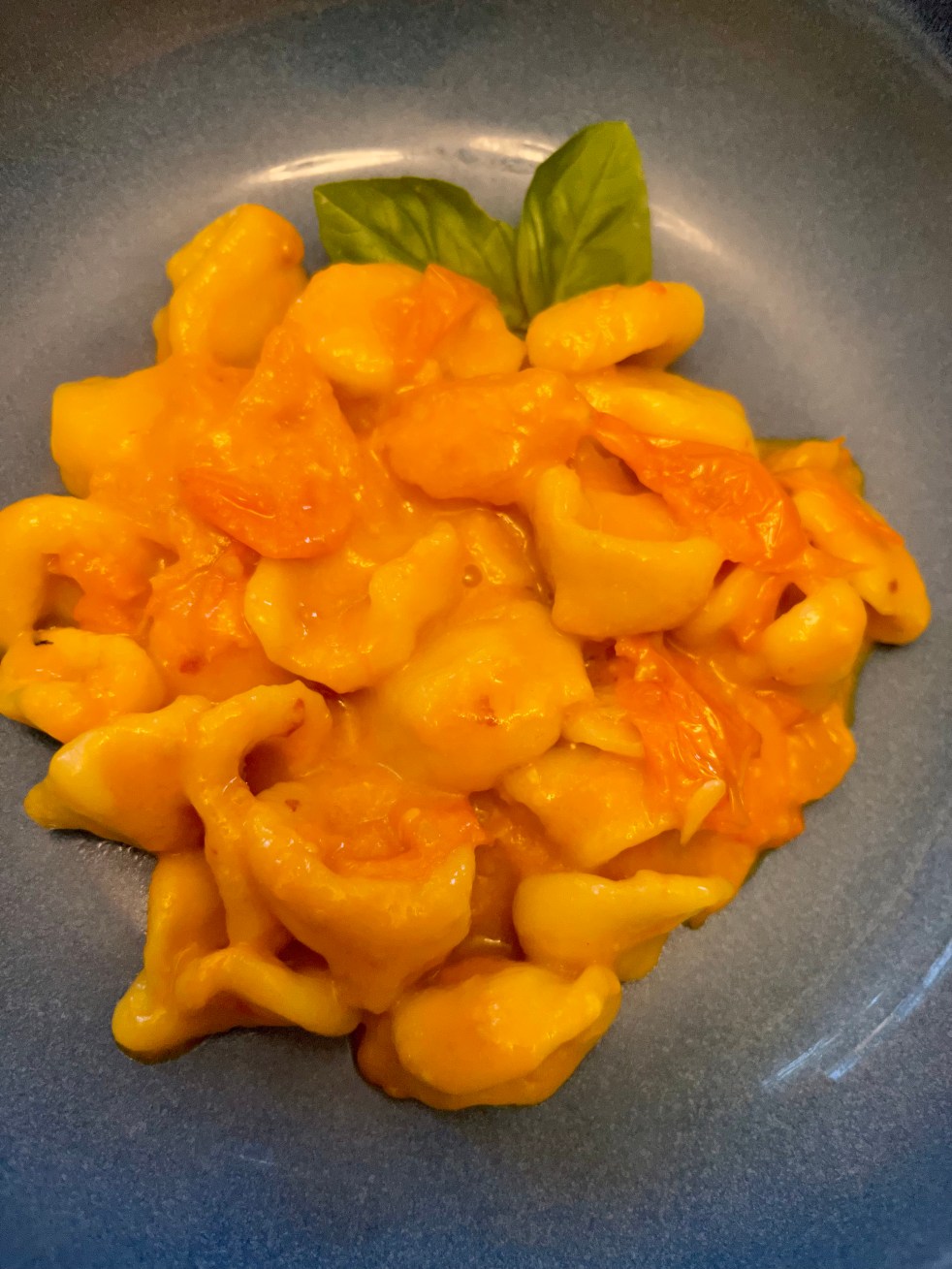
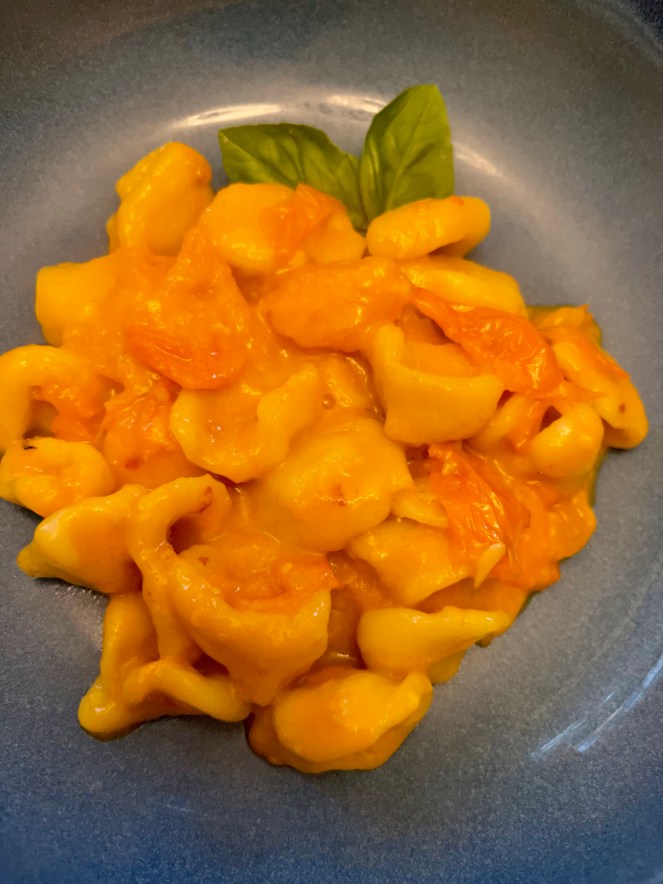
Pasta Arrabbiata with sun-gold tomatoes

Pasta arriabbiata refers to a tomato, red chili peppers, and garlic-based sauce. I found this recipe* using sun-gold tomatoes and butter and found it absolutely simple, yet delicious. You can use dry pasta, but we made homemade and the flavor made all the difference. You can also use traditional cherry tomatoes, but we absolutely loved the flavor of the sun-gold tomatoes, cooked down. Fresh parmesan, of course is preferred, but store-shredded is also fine. In the end, the sauce itself is very simple – both in ingredients and assembly. If you prefer to make this vegetarian, simply leave out the anchovy paste and add a bit more salt to taste.

If you are going to make homemade pasta, you will need to do so about 2 hours ahead: for assembly, and hour and 1/2 to rest and dry. If not, any shape will do. We made ours with orecchiette, but it is truly your preference. The recipe is here: Pasta – Orecchiette.

You will need:

  1. 1/4 cup extra virgin olive oil
  2. 2 pints sun-gold cherry tomatoes, halved
  3. 4 tbs butter, unsalted
  4. 1 tsp anchovy sauce
  5. 4 garlic cloves, thinly sliced
  6. 1/4 tsp red pepper flakes, dried
  7. 1 cup shredded parmesan
  8. Handful of fresh basil, torn
  9. Kosher salt, as needed
  10. 1lb dried orecchiette or
  11. 3 cups semolina flour (fine) & salt for fresh orecchiette (for making fresh pasta)

To make the sauce

  1. Heat olive oil in heavy pot (like a dutch oven) over medium heat. Also heat separate pot with salted water for your pasta.
  2. Add garlic and crushed red pepper. Cook until fragrant (about 2 minutes)
  3. Mix 1 pint of the tomatoes, a pinch of salt and cook until tomatoes burst and become saucy (about 8 -10 minutes)
  4. Cook fresh pasta in salted water (2-4 minutes, depending on type).
  5. Using slotted spoon or tongs, transfer pasta to tomato pot. Be sure to save a little starchy pasta water as a reserve.
  6. Add butter, anchovy sauce, and remaining tomatoes to the pot and stir. Cook until glossy, adding pasta water as needed, until it is creamy. Season with salt and stir in parmesan. Top with fresh basil.

*Pasta recipe is my own. The recipe for the sauce is from Bon Appetit.

Italian

Homemade Pasta – Orecchiette

Little ears – fun and easy to make

Orecchiette is my favorite short pasta. It means “little ears” and is pretty typical of southern Italy. I like it best because it holds the sauce in its little pocket, and when it is made fresh, the texture is absolutely delicious.

Count on prepping this two hours ahead. You will need 1/2 hour to rest the dough once assembled, a 1/2 hour to shape, and an hour to let the pasta dry. As a result, this is something I would only make on familia Sunday – maybe when I have extra hands to help or a little extra time. We are just too busy during the week.

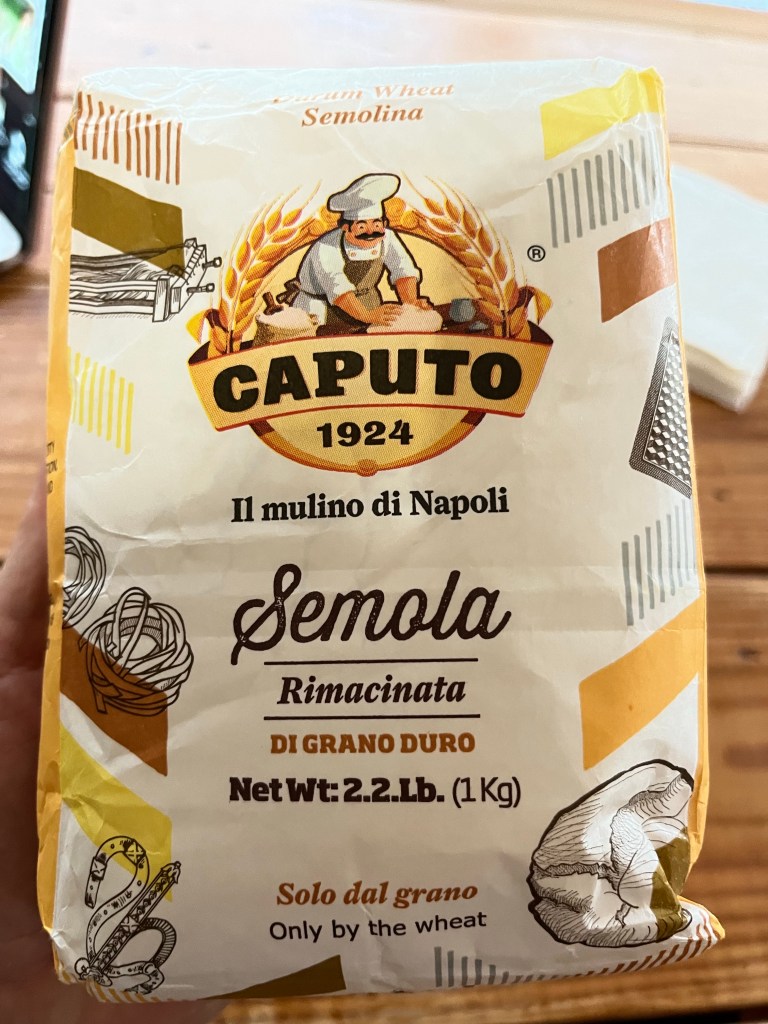
Homemade pasta is the more flavorful than dried, and while you can certainly use all-purpose flour (I often do), a good quality fine-grade semolina flour makes a world of difference in texture and bite. Also, when you do little hand-rolled or knife shapes, I think it is a bit of fun. So if you have the time and resources, give it a try. This is a great-tasting semolina flour from Naples from Amazon and is the one I used for the recipe. Rimacinata refers to it being ground finely – this is idea for pasta and pizza dough. Pro-tip – when buying bags of flour of the internet, I put it in the freezer for 24 hours and then store in an air-tight container.

2 bags is around $10

Serving size – 5-6 adults

You will need:

  • 3 to 3 1/3 cups of semolina flour
  • 1 cup water, room temperature
  • 2/3 tsp fine salt

Steps:

  1. Place flour on a large pastry or cutting board and make a well in the center with your hand. Add salt to the center.
  2. Add water a little at a time, working the dough with your hand and making sure it is incorporated before adding more. You can use a tablespoon or your hand, whichever is easier for you.
  3. Knead the dough for about 6-7 minutes, until it is elastic and put together. You don’t want to overwork it and get it sticky.
  4. Form a dough ball and let it rest under a kitchen towel for 30 minutes.
  5. When rested, use a knife to cut off a portion of the dough. Roll into a snake shape until it is about one inch thick.
  6. Cut off slices about 1 cm wide.
  7. Use a knife with a round tip (like a typical dinner knife). Roll the slice towards you, pressing down.
  8. Then, take the pasta and shape it around your index finger on the opposite side. Repeat.
  9. Be sure not to place them sticking together, but giving a little room. Let the pasta dry for an hour before serving.
  10. *You may need to dust the board a bit with additional semolina flour.
Kneading is fast and easy, maybe 6 minutes, tops.
Conscripting your children into helping you is always a good idea.
Italian · Mediterranean

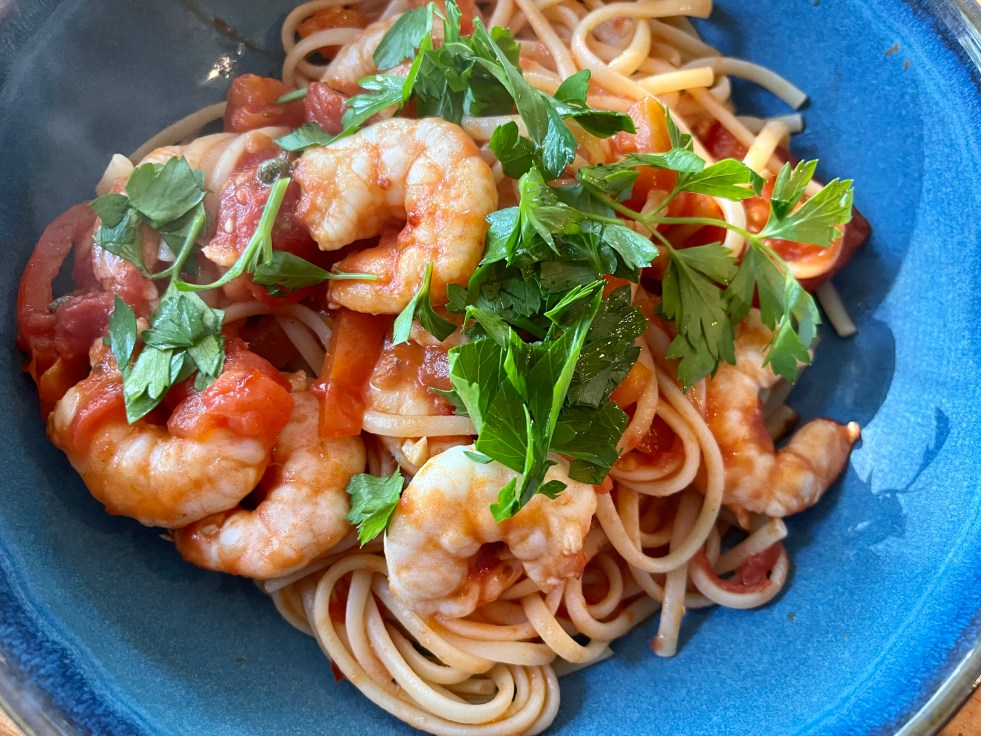
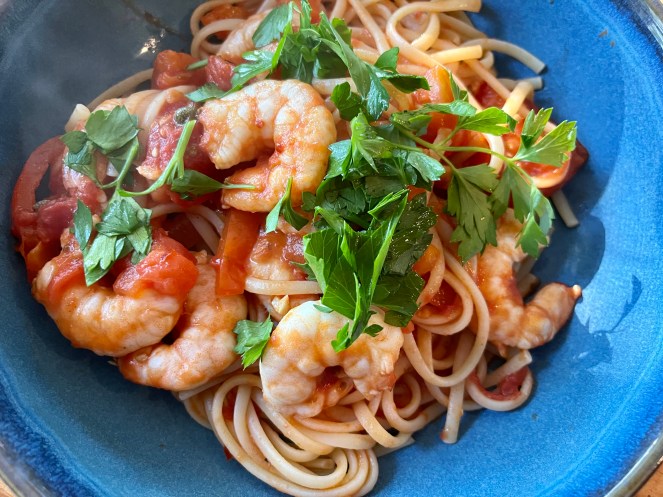
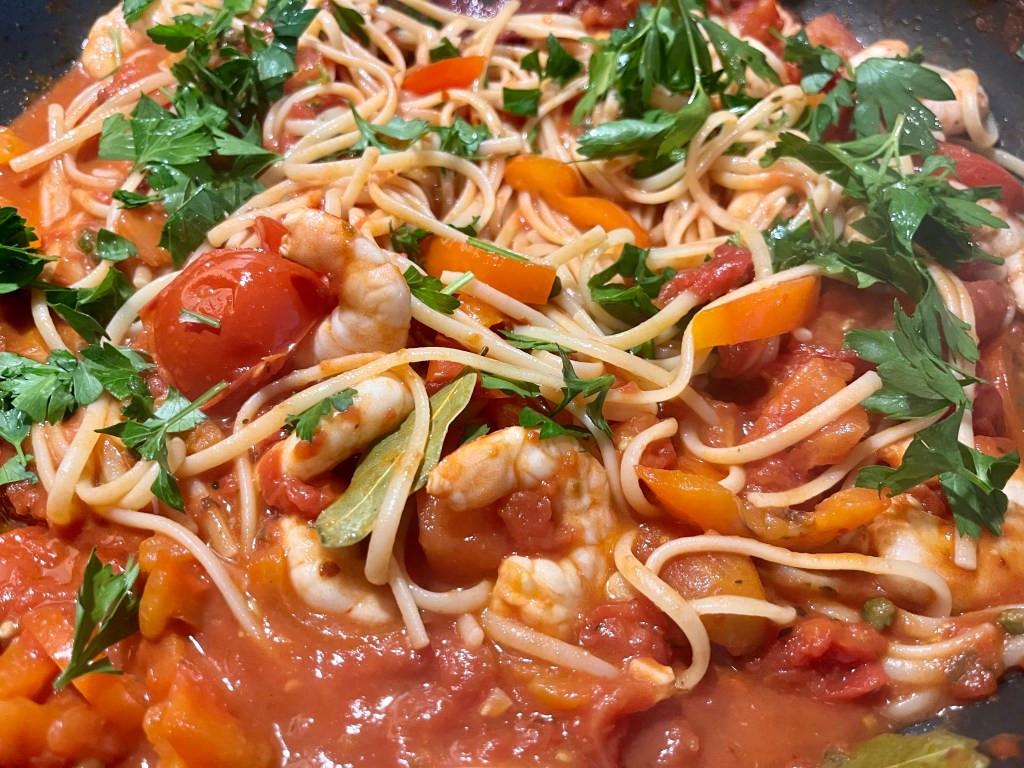
Fra Diavolo – spicy shrimp & linguini

This fiery shrimp and tomato pasta is easy to make and very satisfying. The name Fra Diavolo translates to “brother devil.” The origins are southern Italy where there is abundant seafood, herbs and fiery peppers. If you know this blog, we also often make shrimp Diablo (a Latin American iteration with cilantro and avocado) when I have some good avocado. I love this dish when it is getting cold – the pasta comforts you and the chilis warm you up. They say not to put cheese on this because its seafood, but I often put a little fresh parmesan on top because it makes me happy.

This sounds means it’s about to smell amazing in your house 🏡

You will need:

  1. 1 pound shrimp, peeled and deveined
  2. 1 lb linguini
  3. 1 sweet bell pepper (yellow or orange), sliced thinly
  4. 4 roma tomatoes, halved – then quartered
  5. one 28 oz can, whole peeled tomatoes (preferably San Marzano), with juice
  6. juice of 2 limes
  7. 2-3 tbs olive oil
  8. 2 tbs salt
  9. 4 cloves garlic – crushed*
  10. 3 bay leaves
  11. 2 tsp dried oregano
  12. 1 tsp thyme
  13. 2 tsp crushed red pepper
  14. 2 tbs capers
  15. 2 tbs anchovy paste
  16. 2 tbs butter
  17. 1/2 cup fresh flat-leaf parsley, chopped

Steps:

  1. Marinate the shrimp in lime juice and a bit of salt for 20-30 minutes.
  2. Fill a large pasta pot with water and bring to a boil.
  3. Heat large skillet over medium heat and add olive oil when warm. Add garlic and saute for a minute or so. Add pepper slices and stir and cook for 3 minutes until they soften a little.
  4. Add oregano, bay leaves, thyme and saute for 2 minutes. Then, add crushed pepper and capers, saute for 5 minutes until fragrant. Add roma tomatoes, saute for 5 minutes.
  5. Add canned tomatoes, you can crush them with your fingers beforehand or break them up with a wooden spoon, cook for 5-7 minutes. Add anchovy paste, and simmer for 10 minutes, stirring occasionally. Add butter halfway through to add richness and depth.
  6. By now, the pasta water should be boiling. Add remaining salt and pasta. Cook until al dente. Reserve a little pasta water before draining (about a cup).
  7. While the pasta is cooking, add shrimp and cook until it just turns pink (4-5 minutes). Add parsley to finish. Use reserve pasta water if needed when you add noodles to the sauce and work it in.
Marinating the shrimp
Liquid gold ❤️❤️ and secret sauce weapon

*Note – if you have difficulty peeling fresh garlic, soak them in a dish of hot water for a few minutes. Voila! Easy to peel!

Soaking for 4-5 minutes will help

Italian · Mediterranean

Sunday Sauce

Sunday sauce is a rich meaty traditional sauce to serve for a big family meal. It is best cooked low and slow for several hours. You can also add Italian sausage and or meatballs to the sauce, depending on the size of your meal. This makes a very double portion. I use it for a meal for 5-8 people, and freeze the rest for another meal in the future.

You will need:

  • 4 tablespoons extra-virgin olive oil, divided 
  • 4 pork short ribs (around a 1lb)
  • 1/4 pound pancetta
  • several Italian sausage links, spicy or sweet depending on preference*
  • Coarse salt and freshly ground black pepper
  • 1 medium onion chopped 
  • 5 garlic cloves, minced
  • 1 small carrot, peeled and chopped
  • 2 teaspoons dried oregano
  • 5-6 fresh basil leaves
  • 1/2 tsp of red pepper flakes
  • 1 bay leaf
  • 1/3 cup red wine
  • Two 28-ounce cans whole peeled Italian tomatoes, crushed by hand
  • Two 28-ounce cans crushed tomatoes.
  • 2 pounds penne, ziti or pasta or your choice (one that can support a hearty meat sauce)
  • 2 tablespoons tomato paste* if needed
  • 1/2 cup fresh grated parmesan cheese
  1. In a large enameled cast-iron pot, heat 2 Tbs olive oil until shimmering. Season the short ribs with salt and pepper and add them to the casserole in a single layer along with the sausage links. Cook over moderately high heat, turning occasionally, until browned, around 10 minutes. With tongs, transfer the short ribs and sausages to a plate and set aside..
  2. Pour off all but 1-2 tablespoons of fat from the pot. Add 2 more Tbs of olive oil. Add the onions & carrot, and a generous pinch of salt; cook over moderate heat, stirring occasionally, until browned, 7-9 minutes. Add the garlic, oregano, pancetta and cook, stirring, until fragrant, about 2 minutes. Deglaze the vegetables and pancetta with 1/3 cup red wine until the liquid is evaporated.
  3. Add the tomatoes with their juices. Be sure to rinse a little of each can with some extra water to get all the bits, swirl it around and add to the pot. Season with red pepper flakes and the bay leaf. Bring to a boil.
  4. Return the short ribs, sausages and their juices to the pot, cover partially and simmer over low heat, turning the short ribs occasionally, until the meat is very tender and the sauce is thick, about 3 1/2 to 4 hours.
  5. 30 minutes before serving: Set a large pot of salted water to boil for your pasta. For your Sunday sauce – add fresh basil leaves 30 minutes before serving. Add more oregano or salt as needed. If necessary, add tomato paste in the last half hour to thicken the sauce as needed. Finish off the sauce with fresh grated parmesan cheese.
  6. 20 minutes before serving: In a large pot of boiling salted water, cook the pasta until al dente. Drain the pasta, reserving 1/2 cup of the cooking water. and set aside
  7. Heat a large saucepan over medium heat. Transfer the pasta and toss well with some of the sunday sauce and cook for 1 to 2 minutes. Add some of the reserved pasta water and work it in. Top with additional cheese and pieces of meat from the sauce.

.

Italian · Mediterranean

Bolognese Sauce

You need a lot of time to make a proper Bolognese sauce, as it is best left to simmer for around 3-4 hours. As a result, this is a perfect Sunday sauce – leaving it to simmer all day and fill the house with good aroma:) What sets a Bolognese apart from other meat sauces is the sofritto (onion, celery and carrot) and the addition of milk or cream. You can use wine here two ways – deglaze the vegetables before you add the meat, or deglaze the meat before you add tomato. I have done it both ways, but this recipe will be incorporating the wine with the meat. This portion should make a double batch for a family of 5-6. We use half, and then freeze the other for a day we don’t feel like cooking. Always serve with a great loaf of bread and pasta.

You will need:

  • 3-4 Tbs olive oil
  • 1-2 cloves garlic
  • 1 cup small onion, chopped
  • 1 cup chopped carrots
  • 1 cup chopped celery
  • Salt, 3-4 tsp (divided)
  • Black pepper, 1 tsp
  • 1 bay leaf
  • Fresh basil (7-8 leaves)
  • 1 pounds ground beef (85 or 90% lean)
  • 1 lb ground sweet Italian sausage
  • 1 cup dry red wine
  • 1 quart or large can (28 oz) peeled tomatoes (I prefer Cento San Marzano)
  • 1 quart or large can (28 oz) crushed tomatoes
  • 1/2 cup milk or cream
  • 1 pound wide pasta – Pappardelle or Tagliatelle
  • ¼ cup grated Pecorino Romano Cheese

Steps:

  1. In a large stock pot, heat olive oil over medium heat. Saute onion and garlic for 5 minutes until softened. Add celery and carrot, sprinkle 1 tsp of salt and saute for an additional 4-5 minutes.
  2. Add meat and break up with a wooden spoon, stir and mix the sofritto (onion, celery, carrots) until browned. Season with another tsp of salt. Add red wine and cooked until it is reduced and the liquid is mostly evaporated (around 7 -8 minutes).
  3. Add tomatoes, breaking them up and incorporating them into the mixture. Add remaining salt, pepper, and bay leaf. Fill one of the tomato cans with water (getting all of the tomato juice mixed in) and add to the pot. Fill the other tomato can with water and set aside, in case you need to add more liquid to the pot later on.
  4. Reduce and simmer the sauce for 3 and 1/2 hours. The goal is that the water should be almost evaporated and the sauce should be thick* (use extra water if needed as it simmers) or if it is too liquid, add some tomato paste to thicken it up. After 3 and 1/2 hours, add the fresh basil on top and stir into the sauce.
  5. In another pot, heat salted water and cook your pasta until al dente. Before you strain it, reserve one cup of pasta water and set aside.
  6. After four hours, your sauce should be thick enough that when you move the wooden spoon across the bottom of the pot, you should see it the bottom. Taste the sauce and add more salt, if needed.
  7. To finish, add 1/2 cup of milk or cream, and cook for several more minutes.
  8. Using a clean large sauce pan, heat it over medium-high heat. Add half of the portion of Bolognese sauce and cooked pasta and incorporate. Add 1/2 cup pasta reserve water and work it through – add more if needed. Incorporate the Pecorino Romano cheese and serve.
Italian

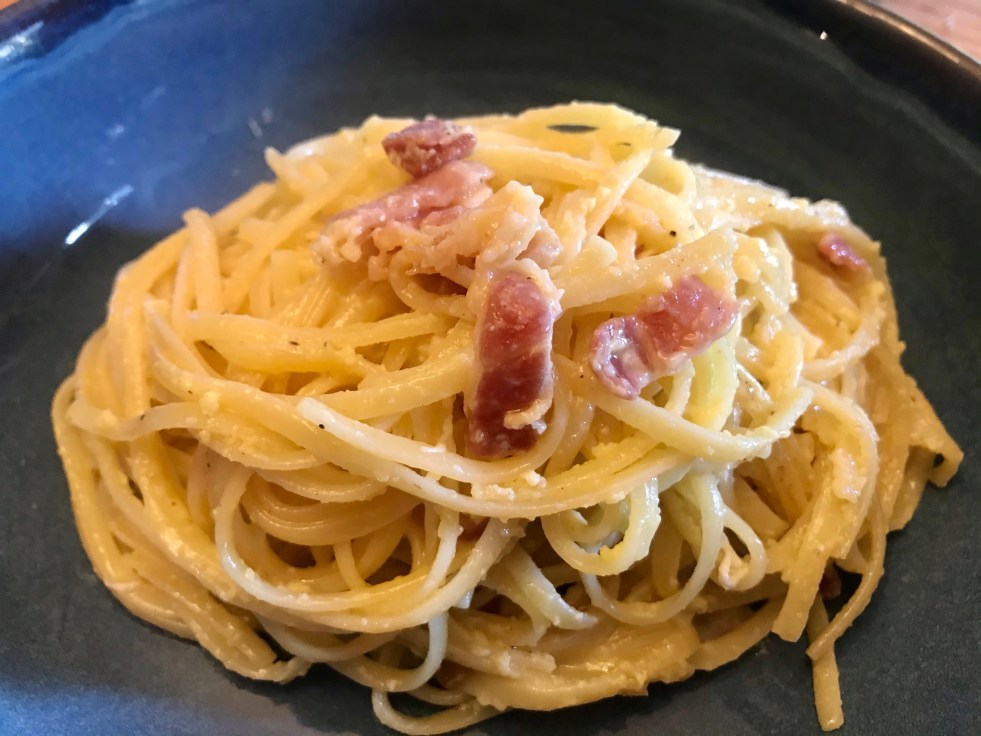
Spaghetti Carbonara

Full disclosure. I did not grow up eating this – that said, once I went to Italy and had it, I understood why people love it so. This has become a favorite of our children. While using pancetta or other Italian meats is preferable, bacon is absolutely fine. Of course in Italy or NYC, you can get your hands on those ingredients and fresh pasta, but for most of us here we have to make do. One thing I think makes a big difference is the use of fresh grated, quality cheese.

I think another element that many American cooks miss is the importance of reserve pasta water. I’ve seen many non-Italians cook the sauce and pasta separate. The ideal is to add the noodles al dente to the pan, and finish cooking them off use a little reserve pasta water. This makes a big difference.

On a side note, I much prefer this with bucatini (my favorite long noodle); however, it is not always available at the grocery store – spaghetti, however, is universal:)

You will need:

  • 4 large eggs, room temperature
  • 1/3 packed cup grated pecorino Romano
  • 1/3 packed cup, grated Parmesan
  • 3 ½ ounces of pancetta or bacon, sliced into pieces about 1/4 inch thick by 1/3 inch square
  • 1 box bucatini, spaghetti or linguine
  • Salt & Coarsely ground black pepper to taste
  • 1 tablespoon olive oil

Steps:

  1. Place a large pot of lightly salted water over medium-high heat, and bring to a boil.
  2. In a mixing bowl, whisk together the eggs, and pecorino and Parmesan. Season with a pinch of salt and generous black pepper.
  3. Add pasta to the water and boil until al dente.
  4. Meanwhile, heat oil in a large skillet over medium heat, add the pancetta/bacon, and sauté until the meat just begins to crisp. Remove from heat and set aside.
  5. Just before pasta is ready, reheat pancetta/bacon in skillet, if needed. Reserve 1 cup of pasta water, then drain pasta and add to the skillet over low heat. Stir for a minute or so, working the olive oil and meat through the pasta. Add in some reserved pasta water and work through the noodles until creamy.
  6. Stir in cheese mixture. Serve immediately, dressing it with a bit of additional grated cheese and pepper.

Italian · Mediterranean

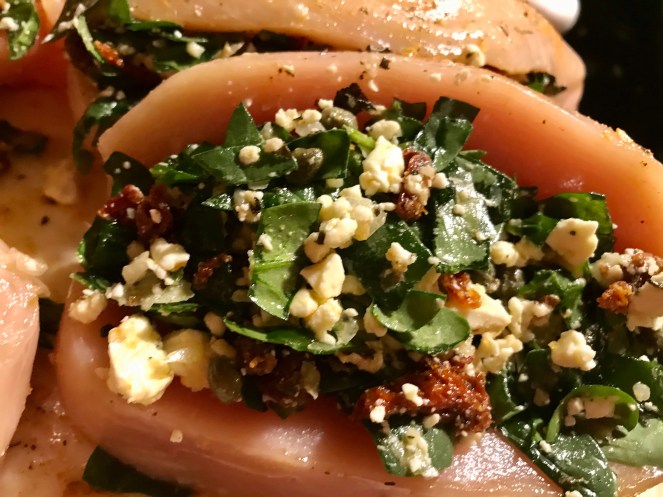
Chicken stuffed with Feta & Sundried Tomatoes

I have been seeing various versions of this pop on my feed and thought it looked rather comforting and easy to make. I tried it out (putting my own spin on it) and was delighted with how easy it was to make and how delicious it was. If you are a feta or sundried tomato lover like myself you will love this. Also, it is a very healthy dish if you are conscientious about diet.

Level: easy. Time: 45 minutes total (15 prep)

You will need:

  • 4 chicken breasts
  • 3 garlic cloves
  • Olive oil
  • 6-8 Sundried tomatoes, drained
  • Feta, 4-6 oz.
  • Fresh spinach, 1-2 cups
  • salt & pepper to taste
  • Fresh basil
  • toothpicks

Step one:

Preheat the oven to 350 degrees. Chop spinach and sundried tomatoes loosely into bite size pieces. Blend spinach, sundried tomatoes, and feta in a small bowl and set aside.

Step two:

Clean and pat dry chicken breasts. Slice a small pocket in each breast, to hold stuffing. Season chicken with salt, pepper, garlic, and basil. Stuff each chicken breast with the feta mix and hold together with 1-2 toothpicks.

Step three:

Heat a cast-iron skillet over medium heat. Add olive oil and when ready add the chicken. Brown on each side for 6-7 minutes. Finish the chicken off in the oven for 15 minutes until fully cooked. Serve.

Baking · Dessert · Italian

Classic Almond Biscotti

There are many different versions of biscotti floating around on the internet, some traditional and some experimental. Some are geared more towards the American palette (think lots of chocolate and sugar) and other towards the simpler, traditional fare for coffee dunking. I tend to prefer my biscotti for drinking with my coffee and prefer to ease up on the sugar, but then again there are times a dark chocolate biscotti with orange call me like a siren. Fun fact: my all time favorite biscotti flavor is pistachio. But in the end, I truly love a classic almond, as well. I think, in the end, there is a great versatility with this recipe: they can be standalone or you can add chocolate or other elements fairly easily.

This recipe can be modified as you see fit. The alcohol provides a depth to the flavor of the cookie. Be sure to add almond extract to achieve the almond flavor.

Time: 3 hours (including chilling & cooling). Actual assembly time is around 30 minutes.

Yield: 3 dozen

You will need:

  • 1 cup sugar
  • 2 3/4 cups all purpose flour
  • 1 1/2 tsp baking powder
  • 1/4 tsp salt
  • 1 cup slivered almonds, unsalted & lightly toasted
  • 2 tsp lemon zest
  • 1 stick of unsalted butter, melted
  • 3 large eggs
  • 1 tsp almond extract
  • 1 tsp vanilla extract
  • Optional combinations:
  • Dark or milk chocolate – you can add as chips or melt to dunk one side of the cookie when finished.
  • Roasted pistachio (1 cup) & dried cranberries (1/2 cup). Use orange zest rather than lemon.
  • Anise – use 1/2 tsp anise extract rather than almond extract.

Step one:

Preheat oven to 350 degrees. Layer almonds on a sheet pan and toast for 3-5 minutes. Check the almonds every minute to ensure they do not become overcooked. Color should be very light brown. Cool.

Step two:

Blend melted butter, sugar, amaretto, and vanilla extract in a large bowl. Add eggs. Stir in flour, baking powder, and salt until just combined. Add almonds.

Step three:

Chill the dough for 30 minutes to ensure that it is easier to work with.

Step four:

Wet your hands (this makes shaping easier) and halve the chilled dough and form 2  loaves on an ungreased large baking sheet. I recommend getting a bowl of water and dipping your hands and rubbing them together; then immediately shape the loaves with your wet hands.

Bake until pale golden, about 30 minutes. Allow the loaves to cool for five minutes on the baking sheet. Remove the loaves (I use a pizza spatula) and cool on a wire rack for and additional 15 minutes.

Cut the loaves with a serrated bread knife.

Step five:

Place biscotti (cut-side down) on a clean baking sheet and bake another 15-20 minutes. The color should be light golden.

Cool the biscotti on a wire rack.

Italian · Mediterranean · Side dish

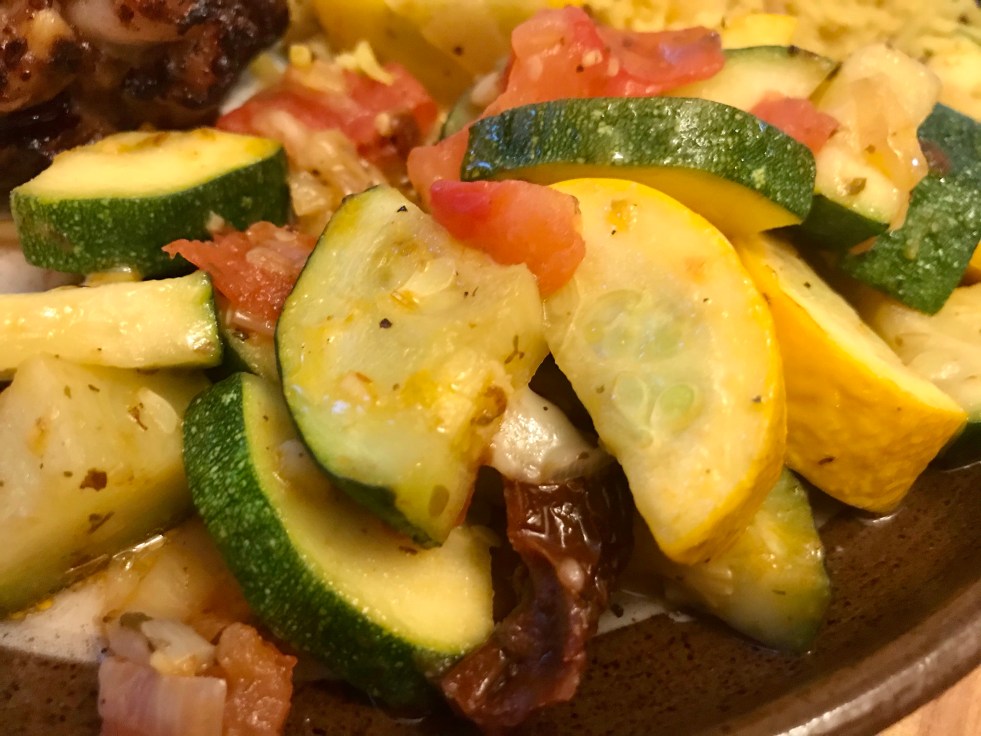
Ciambotta (Italian Ratatouille)

This was a favorite of my mom’s to make during the summer with her garden zucchini and squash, and it is one of our favorite vegetable dishes now.

In the summer, we have several go to recipes for eating our vegetables, such as pisto Manchego, Caponata or Ciambotta. All involve fresh vegetables, and differ in the spicing and process. Here, rather than roasting, everything is simplified and cooked in one pan, because I am, at heart, a lazy homecook.

My children love this, and often ate this during phases when they wouldn’t eat much other vegetables. They thought it tasted like pizza, which I suppose makes some sense. It is fairly easy to throw together, and very satisfying. Feel free to sub out diced tomatoes for fresh, if you are busy. But of course, it is best with fresh tomatoes and a good quality parmesan.

I have had several versions of this, but this remains my favorite. Ciambotta is best in the summer with fresh vegetables and basil. You can dress this up a bit by adding a little red wine (during the cooking of the garlic & onions), or a bay leaf to add depth, or my personal favorite – adding an old parmesan rind to mixture for extra flavor. Adding potatoes is also a traditional way this is made. Personally, I am often very lazy and don’t add potatoes or eggplant, as they make the preparation longer.

Another idea is to blend this up and make it a sofrito or base for future dishes and sauces. It is surprisingly versatile. If I have fresh basil, I prefer to use it. However, if I have dried herbs, I like this with oregano. Serve this with fish, or some Italian sausage for an excellent meal.

You will need:

  • 2 zucchinis, chopped into bite-size pieces
  • 1 summer squash, chopped into bite-size pieces
  • 1/2 small onion or 2 small shallots (I prefer these), sliced thin
  • 3-4 cloves of garlic
  • 1 lb of campari or roma tomatoes cut into bite size pieces OR 1 can of diced tomatoes.
  • 3 tbs Olive oil
  • fresh basil or oregano (2 tsp of dried herbs if you do not have fresh)
  • Salt to taste
  • 1/4 tsp red pepper flakes
  • Good quality parmesan (the older the better)
  • Optional ideas
  • splash of red wine* (optional)
  • 1 small eggplant, chopped* (optional)
  • 3 small scrubbed potatoes, chopped into bite-size pieces (optional)
  • parmesan rind (optional)

Steps:

  1. * Only if using eggplant or potatoes. You will need an extra half an hour to prepare these ingredients, so if you want to include them, begin your prep here. Slice the eggplants and arrange them on a tray. Sprinkle them with salt and leave them for about half an hour to release their liquid. Pat them dry with a paper towel. Chop into bite-sized pieces. Chop potatoes into small pieces and cook for 15 minutes before adding it to the stew, this will prevent the rest of the vegetables from becomming too soggy while waiting for them to cook down.
  2. Coat a skillet with olive oil and heat on medium. Saute onions in olive oil several minutes until they soften. Add garlic and saute for two more minutes. Grind or add a little salt to the onions and garlic to release moisture. Deglaze with a little splash of wine if you have some on hand.
  3. Add zucchini and squash (and potatoes and eggplant, if using) and mix it well with the onion and garlic. Add red pepper flakes, basil/oregano and a little more salt to taste. Cook for 8-10 minutes. Add in tomatoes (and parmesan rind, if using) and cook down for about ten minutes to fifteen minutes until everything is reduced and soft. You don’t want to overcook the squash or zucchini, so there should still be firmness.
  4. Top with fresh grated parmesan.
Appetizer · Central American · Italian · Mediterranean · Side dish

How to Eat Your Vegetables

I’ve been thinking a lot about food and improving health, in general. This is a great pastime when I am procrastinating and avoiding my day job, which if I am honest is pretty often. I am sure you are well versed in the benefits of vegetables, so I will spare you. But do consider adding more into your life, because they will make you feel better, and I think returning to basics has been really helpful this year for me, mentally and physically.

I was born in the early 1970’s – a time where convenience and heavily processed food was the norm. This really clashed with how my great grandmothers and grandmothers cooked. Now, we understand the wisdom of eating fresh produce, and food that is in season. But for decades, the idea of microwave or canned food persisted. Do you remember the weird, sadistic trend of disguising vegetables in foods that kids would eat, like brownies?

When I was a kid, I would go to my other friend’s houses, and would always be shocked by the lack of vegetables, or the ones at the table were drowning in velveeta, boiled within an inch of their life, or was simply canned corn thrown in a bowl, like a sad afterthought. The only exception was my neighbors from Taiwan, where beautifully cooked vegetables took center stage. I was fortunate to eat there on a regular basis, because their daughters were close in age to me.

While I don’t want to pass too much judgement (people were busy, it was a different time), I was very lucky to have good practices and habits set in place by family. My rule of thumb when kids were young and I was very busy was to always make sure at least a salad was on the table. Now, I try to have multiple servings and options, especially in spring and summer when vegetables are very fresh. But I do believe that many people aren’t quite sure what to make, or need some inspiration. So I thought it might do some good to list out favorite vegetables side-dishes for you to enjoy and get inspired by. Most of these derive from Italian and Spanish cooking, but the winter vegetables, I picked up from neighbors whose dishes I admired.

Quick and Easy:

  1. Tomatoes & Feta – Heat oven to 350 degrees. Take campari tomatoes or slice a larger fresh tomato and place in a baking dish. Drizzle with olive oil & top with feta. Top with a little salt and ground pepper. Cook for 10-12 minutes.
  2. Cucumbers & Feta – peel, deseed and slice two cucumbers. Slice 1/2 small red onion thinly. Add a little salt and pepper. Mix 2 Tbs red wine vinegar, 1/4 cup olive oil and some fresh mint leaves. Blend to emusify and drizzle over cucumbers and onions. Add feta or goat cheese. *If you don’t have mint, this is also lovely with fresh basil or oregano.
  3. Quick Caprese – slice tomatoes and top with drizzle of a good olive oil and some basalmic vinegar. Grind a little salt and pepper on top. Add a slice of fresh mozzarella and some fresh basil. Top with basalmic glaze, if you have it.
  4. Sliced cucumbers – Peel & Slice 3 peeled cucumbers wafer thin on a mandolin and thin put them in a strainer. Add salt and let it sit in the strainer for 10-20 minutes. Squeeze all moisture out of the cucumbers and place in a bowl with 2 minced cloves of garlic. Add 1 tbs of white vinegar and salt to taste. Dilute with a little water if needed. This is best served chilled.
  5. Curtido This is mostly as a side for pupusas, but we love to use it as an all purpose slaw for barbecue, hot dogs, or crabcakes. I often serve it with fish for some crunch and dimension. We also add chiles, but that is optional.
  6. Grilled zucchini & summer squash – if you have time for the grill, this is fast and easy to put together.

Vegetable Spreads:

  1. Caponata – this is best made ahead and chilled. This is salty, sour, sweet, and decadent, all at the same time.
  2. Pisto Manchego – like Caponata, this is great spread onto a bread. Has roasted flavors & cumin notes.
  3. Roasted Red pepper Dip – this is great with pita and one I used to always bring to the break room.
  4. Romesco – this is probably my favorite staple, and is often in fridge and ready to go for eggs, bread, or fish.

Takes a little time, but worth it:

  1. Greek salad – this is a favorite in our family, and we make it on a weekly basis in summer. We always bring it to cookouts.
  2. Ciambottathis is favorite of our children. They used to call it pizza vegetables, and had no idea they were eating so many vegetables.
  3. Eggplants and honey – you have to soak the eggplants for an hour, but once they are ready. these are quick and easy to make.
  4. Grilled chile-lime corn – Preheat your grill. Partially shuck your corn and remove the corn silk. Put the husks back and dunk in cold water for ten minutes. Shake water off, and rub corn with butter and if you want some spice i.e. chili-lime seasoning or elote seasoning. Place husks back over the cobs, and grill for ten minutes. If you don’t want spice, salt, pepper and paprika will do.

In the winter:

  1. Maple sweet potatoes – this is so delicious in the dead of winter.
  2. Roasted potatoes, brusell sprouts and asparagus I often make this in fall in a large baking sheet.